
The Happy Hollisters at Sea Gull Beach

When a Family Vacation Became an Adventure
Of all the Happy Hollisters books I read growing up, The Happy Hollisters at Sea Gull Beach was always one of my favorites. There was something about this story that made it especially easy to imagine yourself right alongside Pete, Pam, Ricky, Holly, and Sue. You could almost feel the ocean breeze, hear the seagulls overhead, and share the excitement of packing the family car for a long-awaited trip to the beach.
For a child like me growing up in rural Pennsylvania, simply reading about a family vacation at the seashore was an adventure. Sea Gull Beach seemed like a place far removed from everyday life—a place where you never knew what might be waiting around the next corner or what mystery might wash ashore.
And, like so many Happy Hollisters stories, the adventure begins before the family ever reaches its destination.
When Children Made Their Own Fun
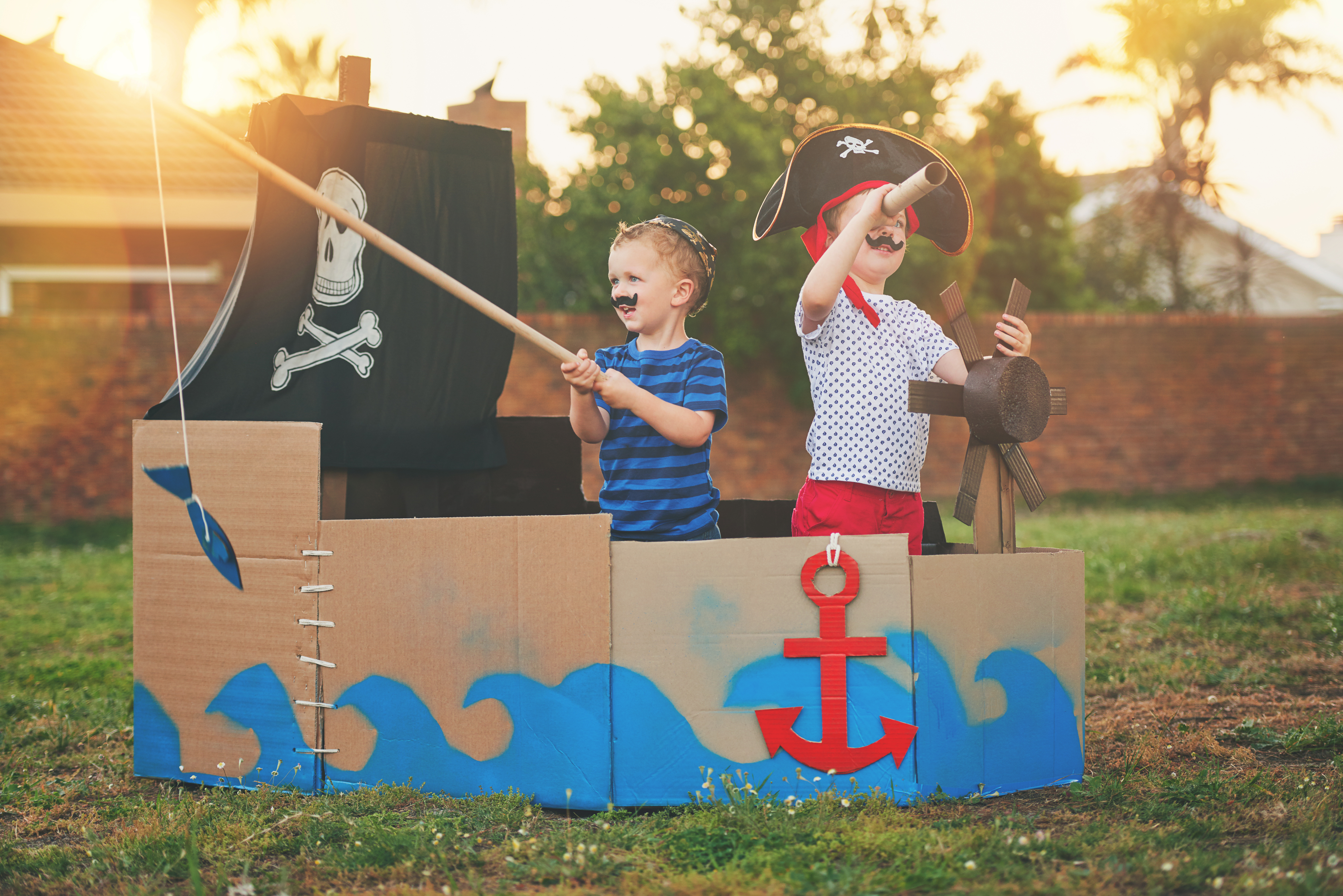
At the beginning of the story, the Hollister children are doing something that was once a familiar part of childhood: putting on their own backyard show. Their make-believe adventure is filled with pirates and American sailors, created largely from their own imaginations.
There are no video games to entertain them and no phones to scroll through when they become bored. Instead, the children gather together, use whatever they can find, and create their own entertainment. A backyard becomes a theater. A porch becomes a stage. Neighborhood children become actors, performers, and audience members.
Those of us who grew up before today's world of constant entertainment probably remember doing similar things. Children organized backyard carnivals, opened lemonade stands, performed plays and talent shows, and invented neighborhood games with rules that seemed to change every five minutes. We made signs from cardboard, created costumes from old clothes we found around the house, and invited parents and neighbors to come watch.
Nobody worried about whether everything looked professional.
That wasn't the point.
The fun came from creating something ourselves.
For the Hollister children, however, their make-believe world of pirates and treasure is about to become much more real. A lighthouse lamp given to the family by Uncle Russ holds an astonishing secret: hidden inside is a genuine emerald.
Naturally, the Hollister children want to know how such a valuable stone ended up inside an ordinary lighthouse lamp. Their curiosity grows when they discover that the emerald may somehow be connected to Sea Gull Beach and the story of a ship that disappeared nearly a century earlier.
Suddenly, the family's upcoming beach vacation has the beginnings of a real mystery.
When the Family Car Trip Was Part of the Vacation
Getting to Sea Gull Beach was an adventure in itself.
Family car trips were very different in those days. There were no GPS systems giving turn-by-turn directions and no smartphones telling you where the nearest restaurant, gas station, or hotel was located. Dad might have a large paper road map folded in the glove compartment while Mom helped watch for highway signs and the next turn.
And the children? They looked out the windows.
They watched farms and small towns pass by. They counted cows, played license plate games, invented guessing games, sang songs, and probably asked more than once, "Are we there yet?"
Families packed snacks and drinks before leaving home because there wasn't a convenience store waiting at every highway exit. If you stopped for lunch, it might be at a roadside picnic table, where sandwiches made at home somehow tasted a little better simply because you were on vacation.
The journey wasn't something to skip through while everyone watched a separate screen.
Getting there was part of the story.
For the Hollisters, the journey to Sea Gull Beach brings new people, unexpected situations, and more pieces of the mystery they are beginning to unravel. As usual, Pete, Pam, Ricky, Holly, and Sue pay attention to things that other people might overlook. A conversation, an unusual object, or a chance encounter might suddenly become an important clue.
That is one of the lessons woven throughout the Happy Hollisters series: curiosity matters.
The children notice the world around them because they are actually looking at it.
Arriving at a Very Different Kind of Beach
When the Hollisters finally arrive at Sea Gull Beach, readers are transported to a beach vacation from another era.
The shoreline isn't simply a backdrop for an endless collection of commercial attractions. There isn't a carefully planned schedule of activities needed to keep everyone entertained.
The beach itself is the attraction.
There is sand. There is water. There is wind. And there is imagination.
The Hollister children spend their days doing the kinds of things generations of children once did at the shore. They swim and play near the water, explore the beach, and build sand castles that might take hours to construct and only minutes for the incoming tide to wash away.
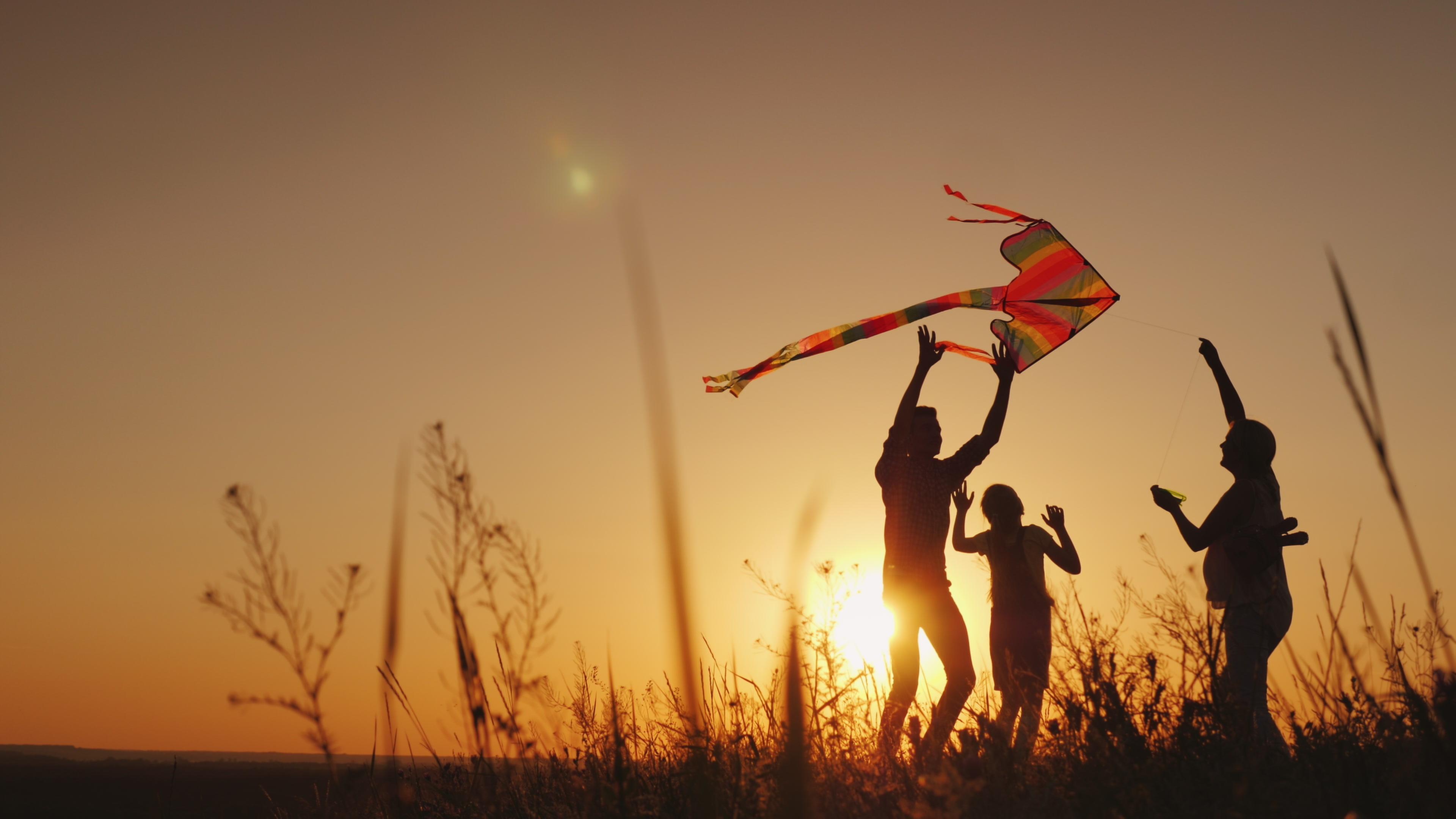
They fly a kite in the ocean breeze and experience the simple excitement of watching it climb higher and higher into the sky.
These activities may sound ordinary today, but perhaps that is exactly what makes them so special.
There was a time when a child could spend most of an afternoon trying to keep a kite in the air. A bucket, a shovel, and a stretch of wet sand could occupy brothers and sisters for hours. Children didn't need someone standing nearby asking what activity they wanted to do next.
They made their own fun.
And while the Hollisters are enjoying everything Sea Gull Beach has to offer, the mystery that began back home is never far from their minds.
A Mystery Waiting at Sea Gull Beach
By the time the Hollister family reaches Sea Gull Beach, this is no longer just an ordinary family vacation.
The mysterious emerald discovered inside Uncle Russ's lighthouse lamp has raised questions the children are determined to answer. They begin searching for information about the valuable stone and its possible connection to the long-lost ship.
What happened to the vessel? Where did it disappear? How did the emerald end up inside the lighthouse lamp?
And if the old stories are true, could a treasure still be waiting somewhere to be discovered?
Those questions turn a summer vacation into exactly the kind of adventure the Hollisters love.
But solving a mystery that has remained unanswered for nearly a hundred years is not easy.
Some clues seem important at first but lead nowhere. Some questions create even more questions. And there are moments when the Hollisters believe they may finally be getting close to the answer, only to discover that another piece of the puzzle is still missing.
Slowly, however, the clues surrounding the emerald begin pointing back toward the old ship and the treasure believed to have disappeared with it. What began as a backyard game about pirates and treasure has become something the children never could have imagined when their adventure began. Pete, Pam, Ricky, Holly, and Sue now find themselves trying to solve a real mystery—one that has remained unanswered for generations.
That was part of what made this book so exciting to read as a child.
Suddenly, every stretch of beach seemed as though it might hide another clue.
Every unusual object might have a story behind it.
And somewhere, perhaps just out of sight, the answer to a century-old mystery might be waiting to be discovered.
When Helping Someone Was Simply What You Did
Yet beneath the mystery and excitement is another theme that runs throughout The Happy Hollisters at Sea Gull Beach and the entire Happy Hollisters series.
When someone needs help, the Hollisters help.
They don't stop to ask, "What's in it for me?"
They simply do what they can.
That was part of the world these books portrayed. If someone's car broke down along the road, another driver might stop. If a neighbor needed a hand, you walked over and helped. If a child was lost, people throughout the community joined the search.
People depended upon one another.
And people looked out for one another.
As the mystery at Sea Gull Beach continues, the Hollisters' willingness to become involved and help others becomes just as important as their ability to follow clues. Pieces of the mystery that once seemed unrelated gradually begin to come together, and the children discover that perseverance, curiosity, and kindness can lead them closer to the truth.
As with so many Happy Hollisters adventures, solving the mystery is only part of the reward. The greater lesson comes from knowing that the family's determination and willingness to help have made a difference in someone else's life.
A Family Vacation They Would Always Remember
Between all the clues, mysteries, and excitement, the Hollisters are still a family enjoying a summer vacation.
And perhaps that is what I remember most fondly about this book.
They spend time together.
They travel together.
They eat together.
They play together.
They experience the beach together.
There is no pressure to photograph every moment and immediately share it with the rest of the world. The memories belong to the family.
At the end of a long day, the children might be tired from swimming, exploring, flying their kite, or building something in the sand. Their sand castles would eventually disappear beneath the tide. The kite would be packed away. And eventually, the family vacation would end, and everyone would return home.
But the memories would remain.
Reading this book as a child made Sea Gull Beach seem like a place you desperately wanted to visit. It wasn't because there was a giant amusement park or an expensive resort waiting there.
It was because an adventure seemed possible.
What the Hollisters Can Still Teach Us
The world our children and grandchildren are growing up in is very different from the one portrayed in The Happy Hollisters at Sea Gull Beach.
Today, we can travel hundreds of miles without ever unfolding a paper map. Children can watch movies for an entire car ride without once looking out the window. A family can sit together on the same beach while everyone looks at a different screen.
Technology has made our lives easier in countless ways.
But perhaps we have also lost a few things along the way.
The Hollisters remind us that children need opportunities to use their imaginations. They need time outdoors. They need the freedom to explore and the opportunity to experience a little boredom once in a while so they can discover how to create their own fun.
They also need to see adults helping others.
They need to learn that kindness doesn't require a reward and that being part of a family and a community means looking out for people besides yourself.
And perhaps most importantly, families still need time simply to be families.
Bringing a Little of Yesterday into Today at Harvest Array
In many ways, those same values are at the heart of Harvest Array.
We cannot turn the clock back to the days when the Hollister children packed into the family car and headed toward Sea Gull Beach. But we can choose to keep some of the best parts of those days alive.
We can support small and family-owned American businesses.
We can choose products made with care instead of always choosing what is mass-produced and disposable.
We can put toys into children's hands that encourage them to imagine, build, and create.
We can gather around the dinner table and enjoy foods that remind us of the kitchens we grew up in.
We can spend an afternoon outside instead of in front of a screen.
And we can make time for the people around us.
At Harvest Array, many of the products we offer remind people of a simpler time. Perhaps that is because the things we remember most aren't always the biggest, newest, or most expensive things.
Sometimes it is the taste of a jam your grandmother used to serve.
Sometimes it is a wooden toy that reminds you of something you played with as a child.
Sometimes it is sitting outside on a warm summer afternoon.
And sometimes it is remembering a family trip to the beach when all you needed for a wonderful day was a bucket, a shovel, a kite, and the people you loved.
The Happy Hollisters at Sea Gull Beach remind us that adventure doesn't have to be complicated. Children don't need someone else to create every moment of fun for them. Families don't need an elaborate itinerary to make memories that last a lifetime.
And helping another person never goes out of style.
Maybe the lessons from Sea Gull Beach are really quite simple:
Look out the window on the way there.
Help someone when you can.
Build the sand castle, even though you know the tide will eventually wash it away.
Fly the kite as high as the wind will carry it.
And most of all, spend time with the people you love.
Because years from now, when the vacation is over, and the children are grown, those simple moments may be the ones you remember most.
Fresh Off the Blog—Like Jam Off the Stove

National Do Something Nice Day: Simple Acts of Kindness to Brighten Someone’s Day
What if one small act of kindness completely changed someone's day? From sharing a homemade treat a...

Celebrate National Family Day: Gather Around the Table, Make Memories, and Enjoy Good Food
We already know that we don't need a National Day to remind us how important our families are to us,...
Troyer's Rope Company
Manufacturers of solid braided multifilament polypropylene rope, it's the rope derby people love! "A...
The Happy Hollisters and the Mystery of the Totem Faces
An Adventure Back to 1958 There was a time when a good mystery didn't begin with a glowing screen. I...

Fall Flavors & Football: Easy Crock Pot and Tailgating Recipes for the Season
You can always tell when fall is coming.. mornings are a little more crisp than what we have been us...

Labor Day 2026: A Day to Honor the American Worker
Celebrating Hard Work, Family, and the Simple Joys of an American Labor Day There is something speci...